Pro Clima Team
January 30,2026


January 30,2026
With the 2027 H1 deadline approaching, the pro clima technical team has expanded on recent industry updates to include specific detailing solutions for New Zealand architects and designers.
With the Schedule Method for NZBC Clause H1 compliance set to be removed at the end of the year, architects and designers are facing a significant shift in how energy efficiency is addressed in both residential and commercial projects. Until now, it’s been enough to tick off a list of minimum R-values, but from 2027 onward, only performance-based options will remain: the Calculation Method or the Modelling Method.
This isn’t just a regulatory update. It marks a broader move toward designing buildings that perform more predictably in the conditions that they’ll be built in. For designers, it’s an opportunity to embed energy performance into the core of the design process, which is ultimately good for clients.
The Calculation Method offers a degree of simplicity by comparing a building’s thermal envelope to a theoretical reference building, but it doesn’t tell us what the heating and cooling demand will be. There are several tools available including MBIE, BRANZ and NZGBC’s free H1 Calculators, and the ArchiCAD H1 Compliance Add on.
But to get the full picture — and to make meaningful design decisions early on, whole-building modelling tools like PHPP (Passive House Planning Package), EnergyPlus and IES Virtual Environment should be used to simulate how your building will perform in its specific location in terms of heating and cooling demand, solar gain and internal comfort across the seasons.
Tools like PHPP aren’t just for Passive House projects. They're increasingly being used in everyday design because they provide a detailed understanding of how design decisions — such as window placement, insulation type and shading — affect overall energy demand. It’s not just about the materials you specify; it’s about how they work together, how the building is oriented, how airtight the envelope is, and whether the insulation is continuous and free of thermal bridges. Theres a lot going on with the building envelope when you don’t have a box ticking option for compliance.
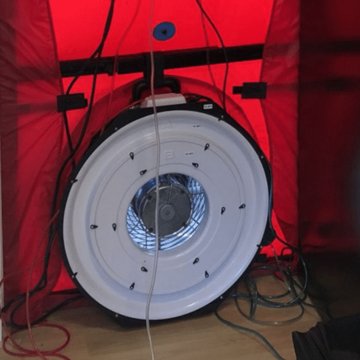
And that’s where the real shift lies. With the Schedule Method going, R-values on their own no longer tell the whole story. A wall with a great R-value won’t perform well if there are gaps in the insulation or if cold air is sneaking in through unsealed junctions, so building envelope airtightness becomes critical.
Buildings that are well-sealed against uncontrolled air leakage are easier to heat, more comfortable (as the temperature can be maintained more easily), and more durable as moisture ingress paths are also controlled. But airtightness should always go hand in hand with proper ventilation — ideally mechanical ventilation with heat recovery (MVHR) — to ensure the fresh, healthy indoor environment we all desire. You can read more about the relationship between airtightness and moisture management in the pro clima Airtightness Study.
If you want somewhere to start with improving thermal performance, focus on insulation continuity and junction detailing. Those slab edges, wall-to-roof connections, and gaps around window that are a little harder to insulate really matter.
Take for example slab edge insulation, which makes the usable (or warm) floor area larger which from a client’s perspective is a no brainer. Comfort aside, the cost of not insulating the slab edge on a 200m² single level house in Christchurch could equate to an additional 1,500kWh/yr of energy being required to maintain an internal temperature of 20 degrees, or around $500 extra on your annual power bill. And once you’re past the payback period for the additional insulation cost (estimated at 5-8 years), the savings are real, year on year. That’s why energy modelling needs to be accompanied by careful detailing and good communication between not only the design and build team, but also the client. The people paying the bills should have a good understanding of where and how the money is being spent, and the benefit of each decision.
While the upcoming change in H1 compliance methods might feel like extra complexity and yet another adjustment to get our heads around, we really think it’s a big and exciting shift in the right direction. It encourages us to move away from compliance as a checkbox exercise and toward a design-led process that considers the building as a whole system. The tools are already available, and when used early in the design process, they can lead to better-performing buildings that can be cheaper to build with lower energy use, greater comfort, and improved resilience.
Now’s the time to get familiar with energy modelling and bring thermal performance into the heart of architectural design, your clients will thank you for it! Our new homes and buildings can be comfortable and healthy all year round — without the constant hum of a heat pump.
Empower your practice with energy modelling to bridge the gap between architectural vision and real-world performance; it’s a win for your clients and the planet.
✅ Identify your Modelling Tool: (PHPP, ECCHO, or IES).
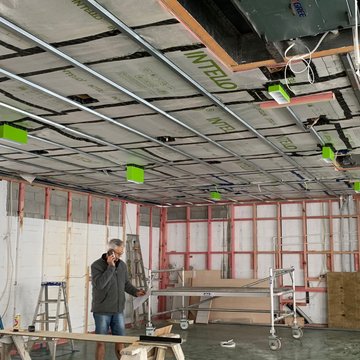
✅ Verify Membrane Continuity: Have you specified a continuous airtight layer? View our Airtightness Study.
✅ Review Junction Details: Check your slab-to-wall details against our NZ-specific CAD library.
✅ Plan for Ventilation: Ensure your airtightness targets are matched with an MVHR system.
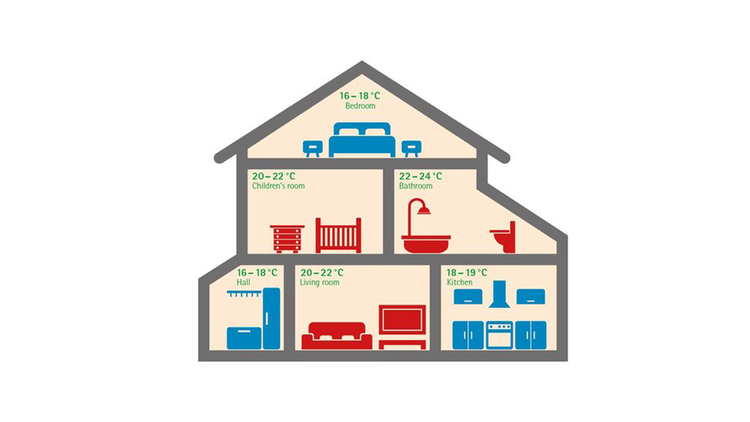
A thermally insulated, airtight building envelope plays a major role in determining how comfortable and pleasant an indoor environment is for us and how well we can work, learn or relax there. The air temperature has the strongest effect on our perception of comfort level: a temperature range of between 20 °C and 23 °C in homes is regarded as comfortable in winter, while temperatures of up to 26 °C are perceived as pleasant in summer. In this context, airtightness has a crucial influence on the effectiveness of thermal protection in both winter and summer.